
How We root canal treatment in DHA does for you:
Stops pain fast: We remove infection without discomfort.
Protects your tooth: We clean and strengthen your natural tooth.
Avoids extractions: You keep your real smile intact.
Total Cases Completed.
Average Treatment Time
Recommended Wear Time
Finding the right dentist for a root canal can feel stressful. Patients across Lahore trust Dental Club because we make saving your teeth fast, simple, and completely pain-free.
At Dental Club, we provide a comfortable and virtually painless root canal experience using modern local anesthesia and gentle techniques. Our expert dental team ensures a smooth procedure while relieving infection pain and protecting your natural tooth.
Our skilled and experienced dentists at Dental Club perform precise, high-quality root canal treatments using advanced rotary endodontic tools. We focus on patient comfort, safety, and long-term tooth preservation
At Dental Club, we follow strict sterilization protocols and use advanced, single-use endodontic instruments to ensure a safe, hygienic, and infection-controlled environment during every root canal treatment.
Dental Club offers high-quality root canal treatments at affordable prices, helping patients in Lahore save their natural teeth without compromising on safety, comfort, or quality.

What happens: We take high-definition 3D digital X-rays of your tooth.
Why it matters: This maps out the exact shape, length, and depth of your root canals. It leaves zero guesswork for the dentist.
What you feel: Nothing at all. It takes less than two minutes.
What happens: Our specialist applies a numbing gel to your gums, followed by local anesthesia around the target tooth.
Why it matters: This completely turns off nerve signals in the area so you do not feel pain during treatment.
What you feel: A brief 3-second pressure pinch, followed by complete numbness.


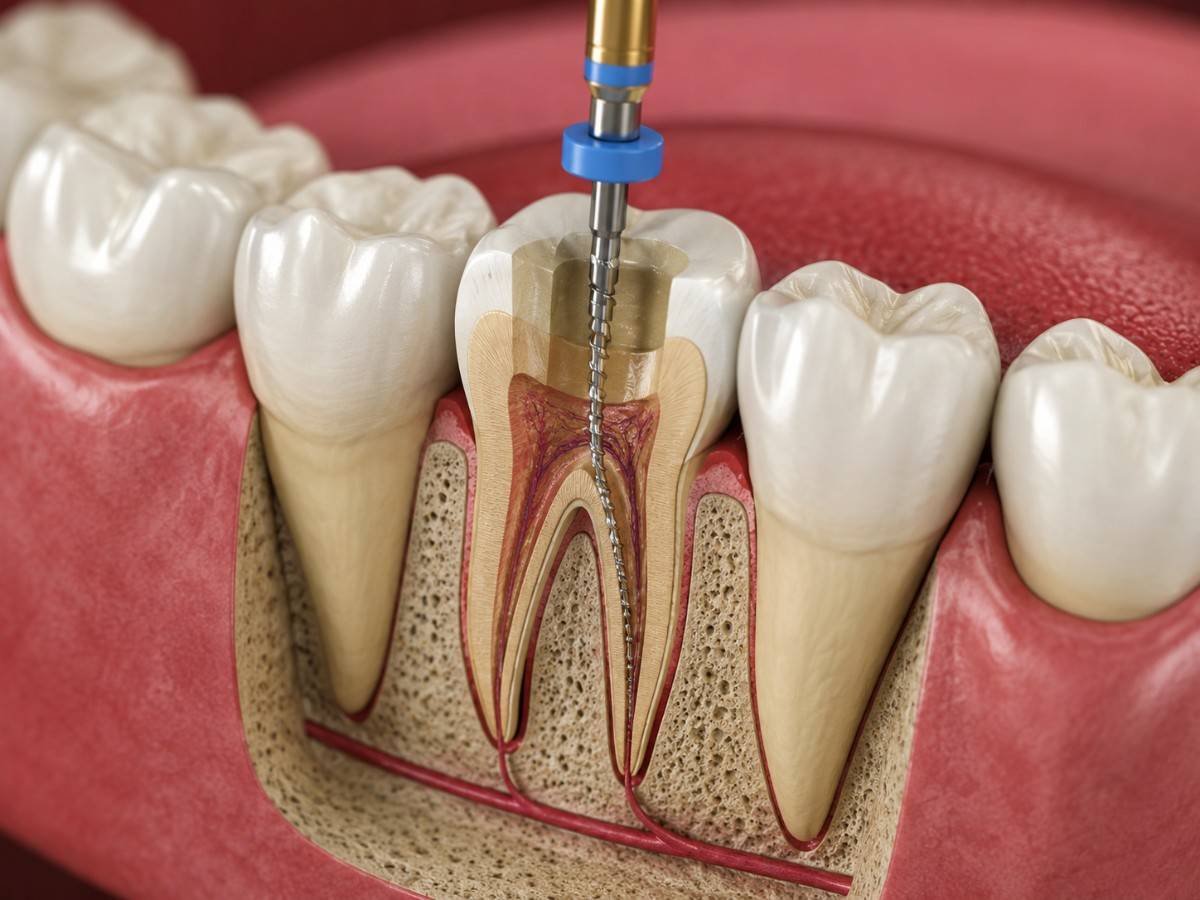
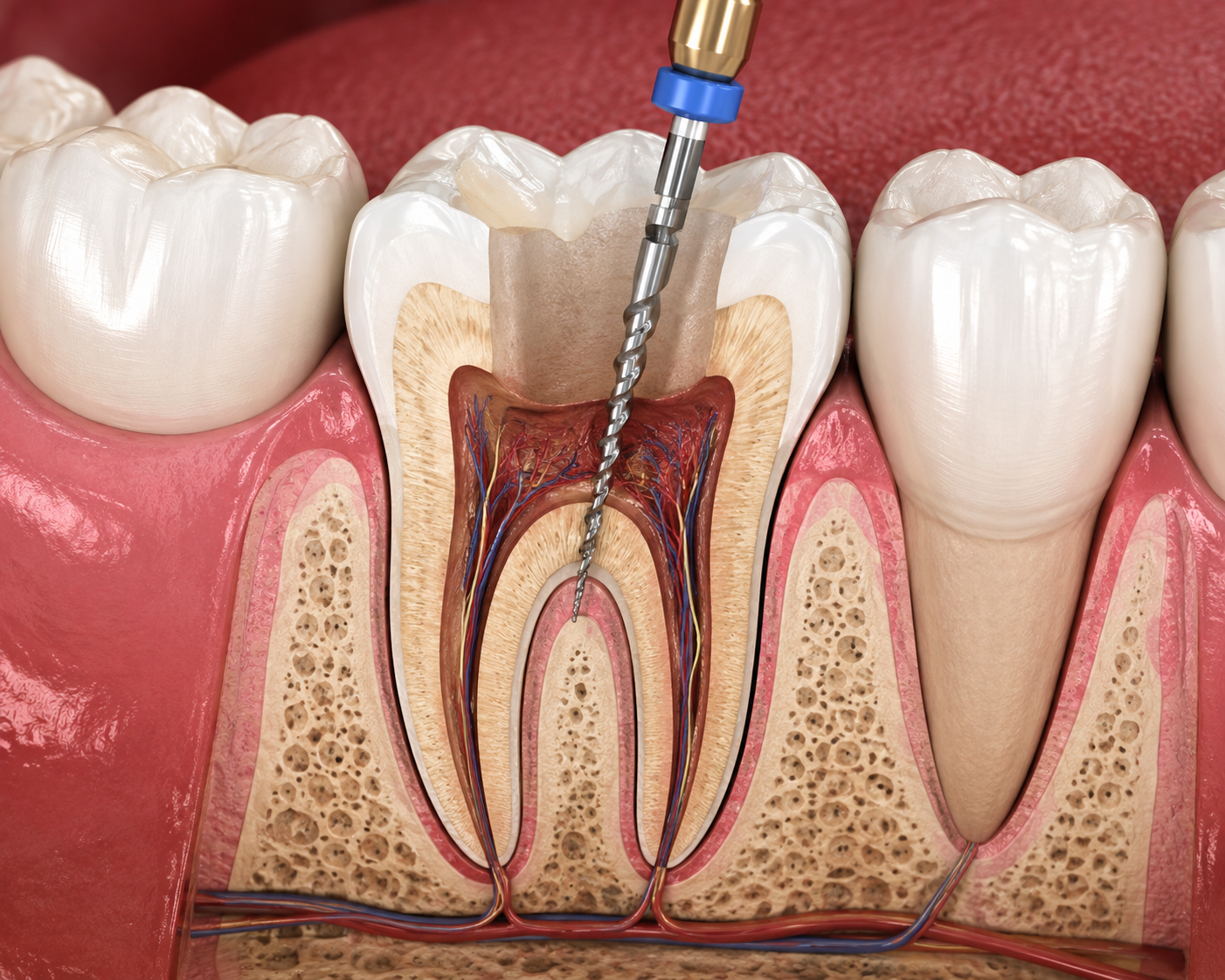
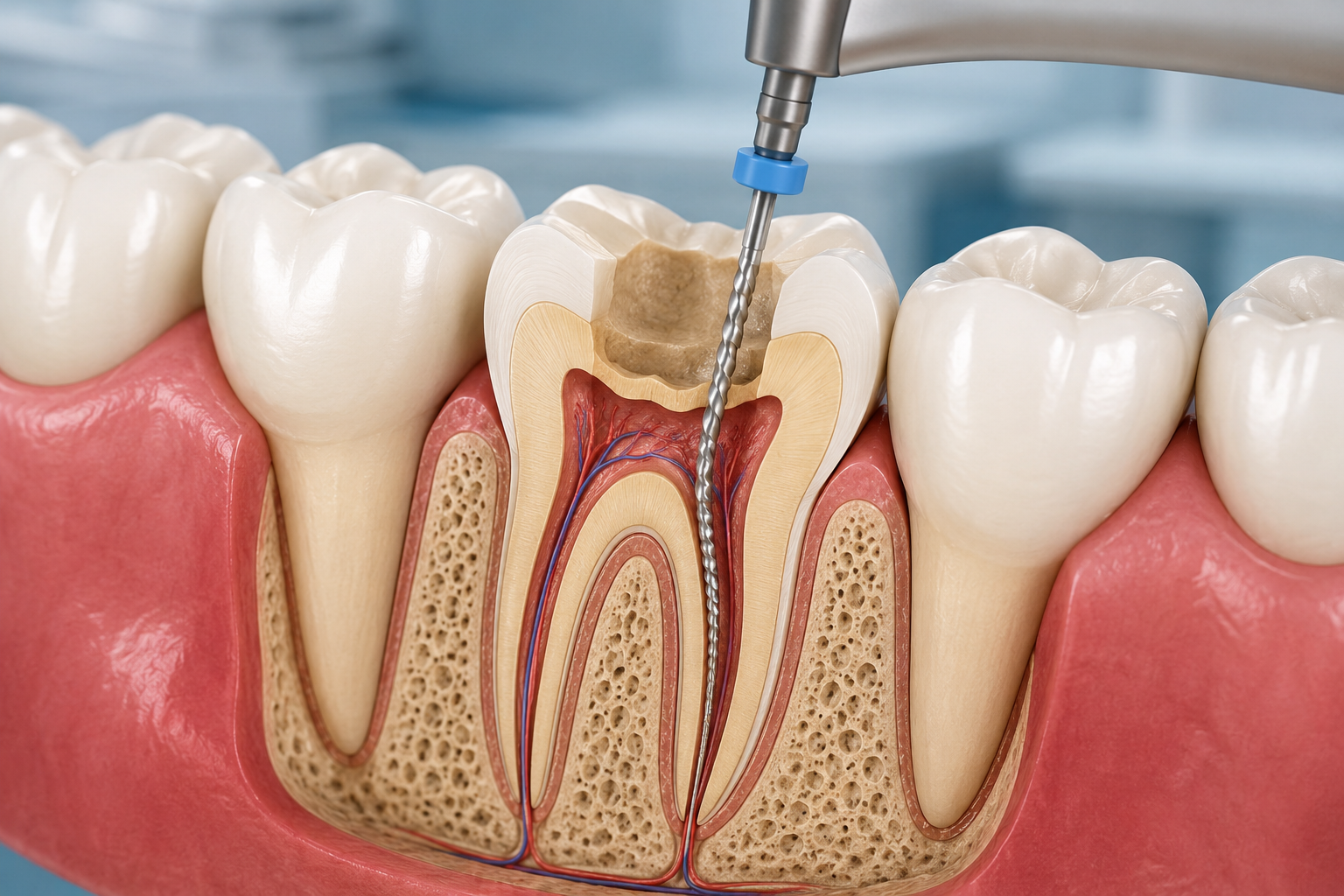
What happens: The dentist creates a tiny access point on top of the tooth. Using ultra-flexible rotary tools, we clear out the infected pulp and nerve tissue.
Why it matters: Removing the dying nerve instantly eliminates the source of your severe toothache.
What you feel: Light vibration and mild pressure, but zero pain.
What happens: We rinse the empty root canals with medical disinfectant to kill lingering bacteria. Next, we fill the clean canals with gutta-percha (a rubber-like biocompatible material) and seal it tight.
Why it matters: A tight seal blocks future bacteria from entering, preventing reinfection.
What you feel: Instant relief knowing the infection is gone.


What happens: Teeth without internal pulp become brittle over time. We seal the top opening with a durable filling and usually place a custom porcelain crown over the tooth.
Why it matters: The crown restores 100% of your original chewing strength and protects the tooth from cracking under pressure.
What you feel: A strong, natural-looking tooth that lets you eat normally again.
BDS, FCPS (Res) – Orthodontics
Chief Dental Surgeon & Clinical Director
Implantologist | Smile Design Specialist
PMDC Verified Dentist & Orthodontist
Certified in Dental Implants (Switzerland & Dubai)
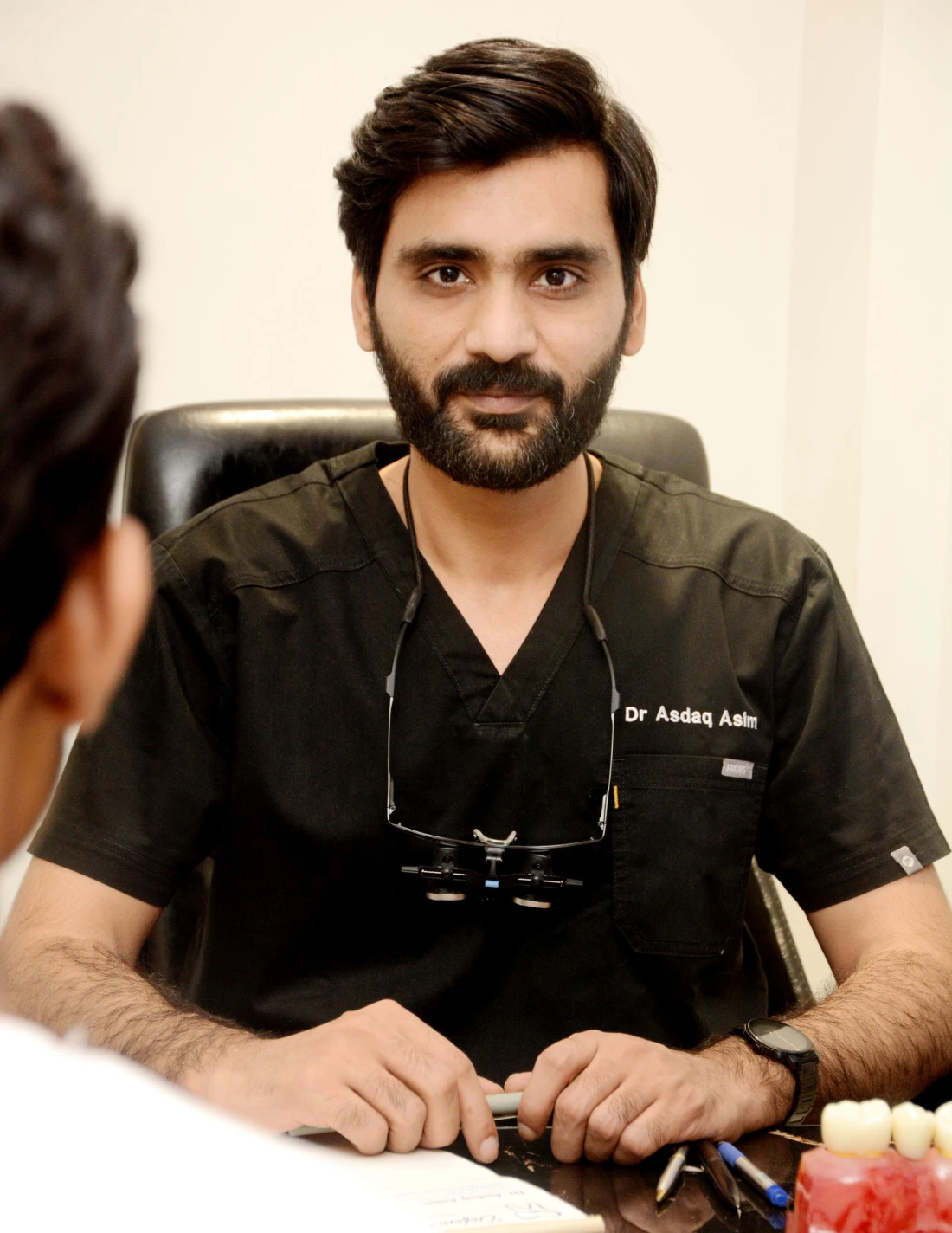
Dr. Asdaq Asim helps patients save their natural teeth using high-precision endodontic techniques.
Top Educational Foundation: Trained at de’Montmorency College of Dentistry and King Edward Medical University.
Specialized Clinical Residency: Completed FCPS Residency at Punjab Dental Hospital, handling complex surgical and restorative cases.
Internationally Certified: Certified in advanced implantology and oral rehabilitation across Dubai and Switzerland.
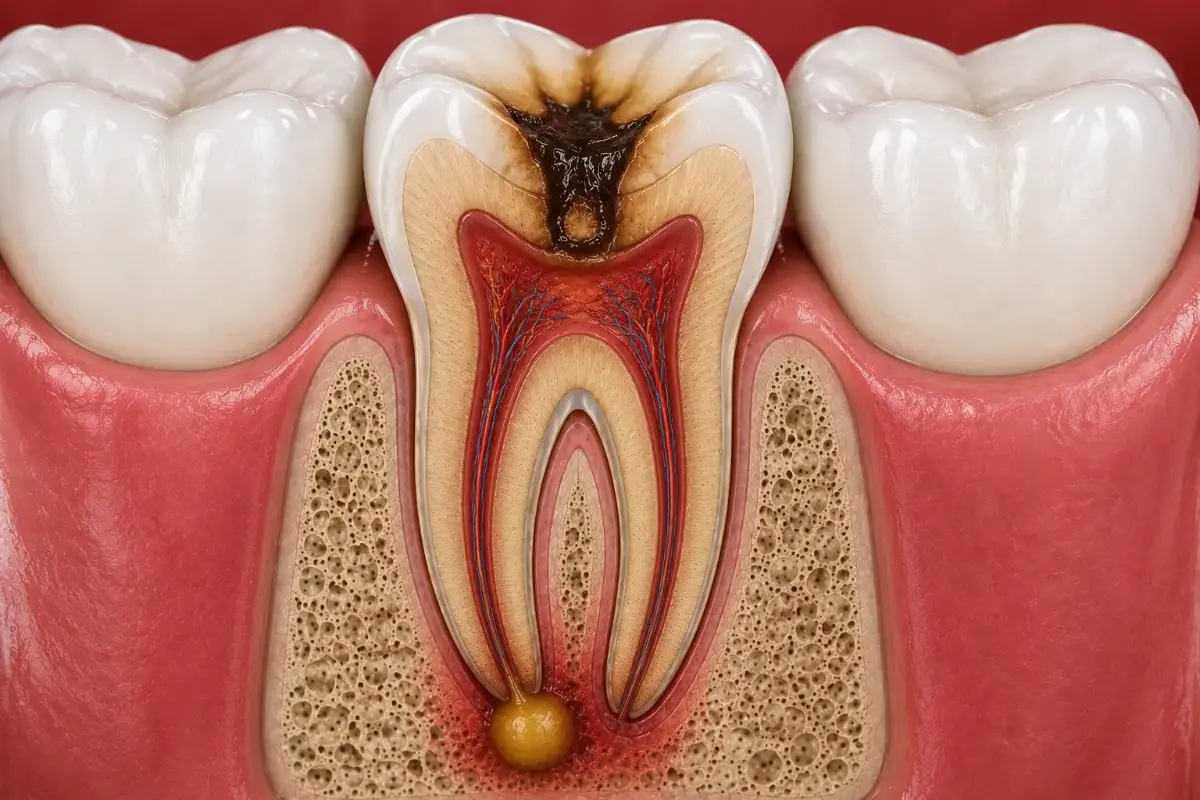

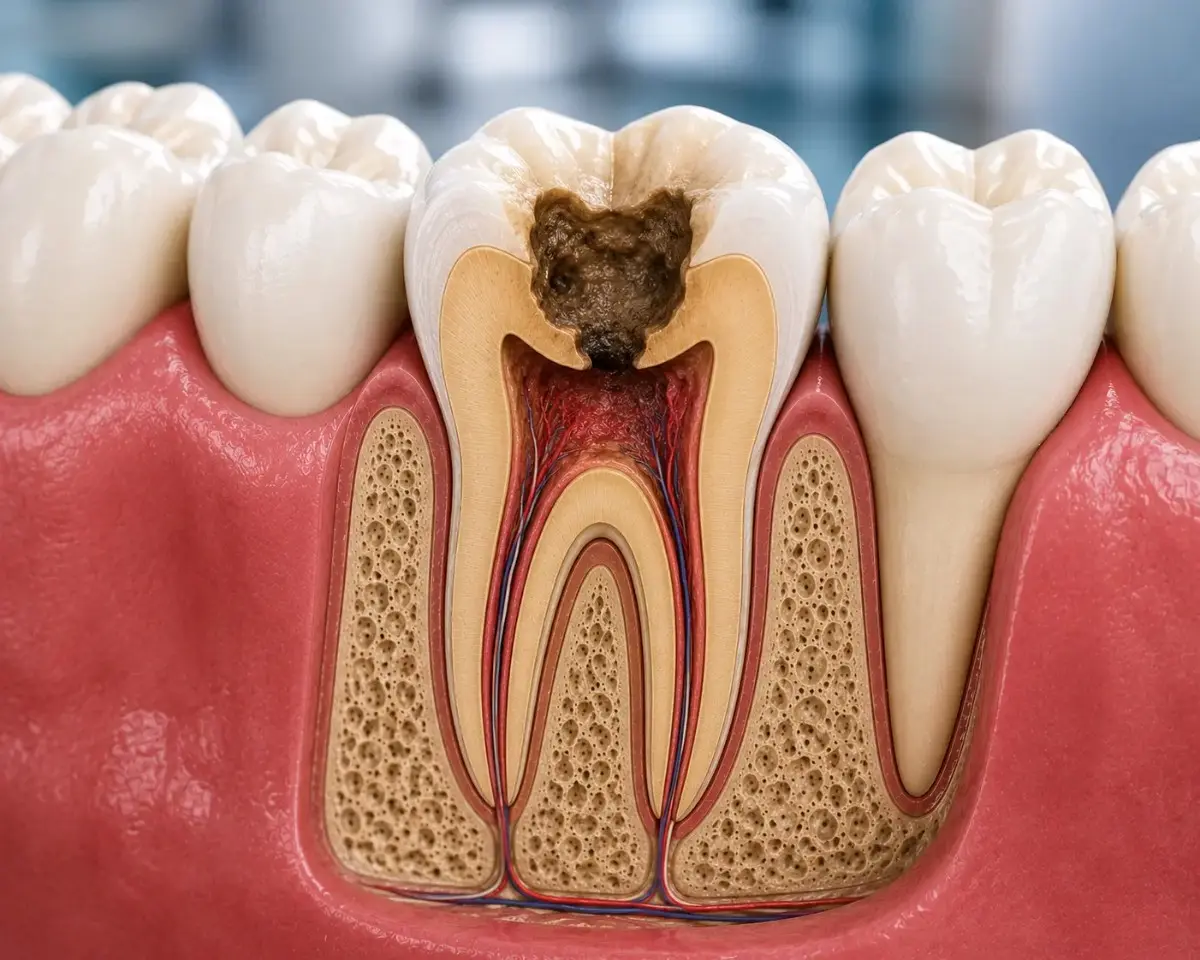

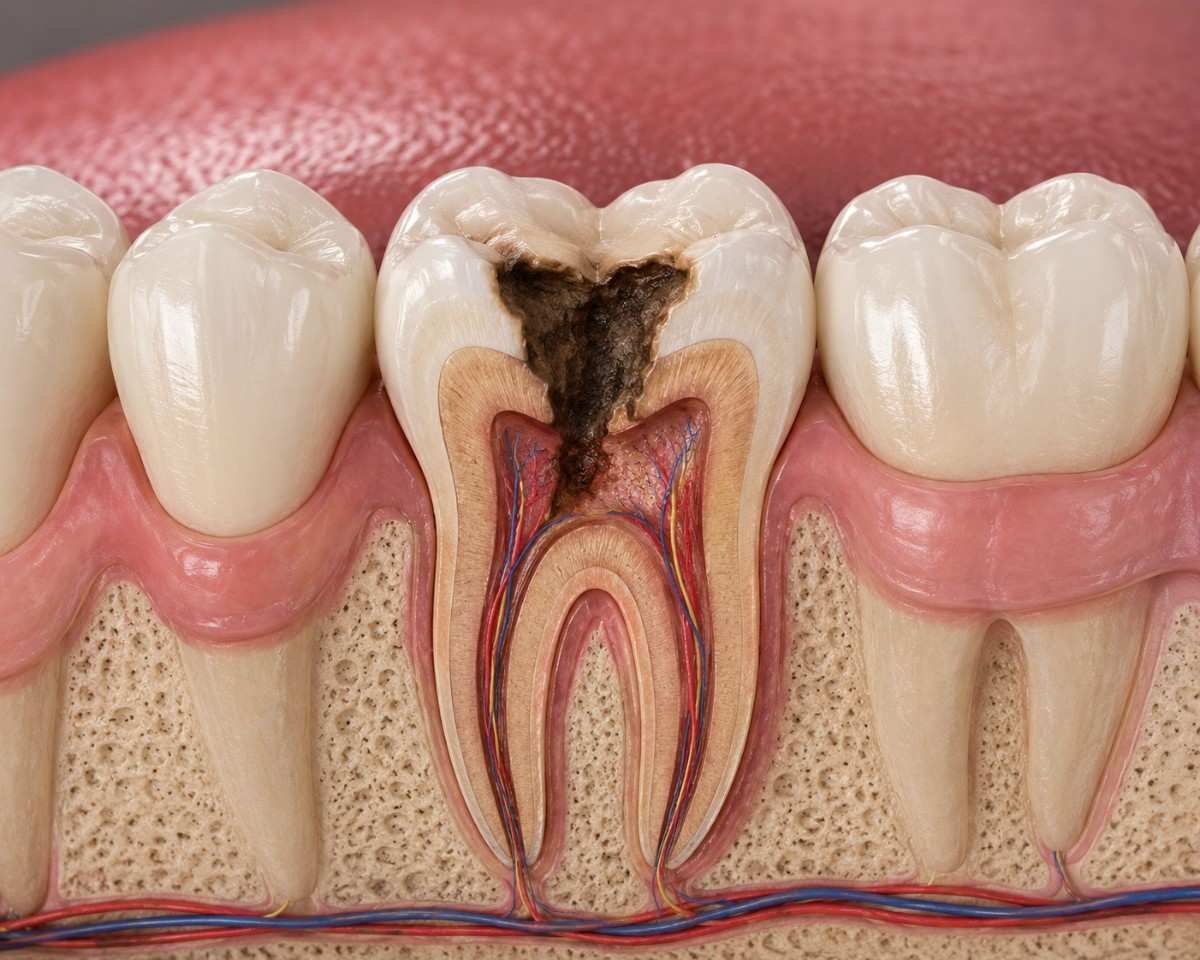

Your most asked questions about root canal treatment, answered.
Root canal treatment is usually not painful because the dentist uses local anesthesia to numb the tooth and surrounding area.
You may feel pressure or slight discomfort during the procedure, but you should not feel significant pain. After treatment, the tooth may be mildly sore or sensitive for a few days, especially when biting.
Most root canal treatments can be completed in 1–2 sittings, depending on the condition of the tooth and the severity of infection. Simple cases may be finished in one visit, while teeth with significant infection may require additional appointments for proper cleaning, medication, and healing.
A dental crown is often recommended after root canal treatment, especially for back teeth, because the tooth can become weaker and more prone to fracture. A crown helps protect the treated tooth, restore its strength, and improve its function. Your dentist will assess the amount of remaining tooth structure to determine whether a crown is needed.
A root canal-treated tooth can last many years, and often a lifetime, when it is properly treated and restored. Good oral hygiene, regular dental checkups, and a protective crown when recommended can help extend the tooth’s lifespan and prevent fractures or reinfection.
Common signs that you may need root canal treatment include severe or persistent tooth pain, prolonged sensitivity to hot or cold, pain when biting or chewing, swelling or tenderness around the tooth, and darkening or discoloration of the tooth. In some cases, an infection may cause a pimple or abscess on the gums. A dental examination and X-ray are needed to confirm whether root canal treatment is necessary.
Yes, root canal treatment is generally safe for sensitive teeth when the tooth has an infected or damaged pulp. The procedure removes the source of the sensitivity and infection, helping relieve pain and protect the natural tooth. Your dentist will examine the tooth to determine whether a root canal is the right treatment.
After root canal treatment, avoid chewing hard or sticky foods on the treated tooth, especially if you have a temporary filling or have not yet received a permanent crown. Avoid biting hard objects such as ice or pens, and maintain good oral hygiene around the tooth. Follow your dentist’s instructions and attend any recommended follow-up appointments to help protect the treated tooth.
Yes, a root canal-treated tooth can become infected again, although proper treatment and good oral care can greatly reduce the risk. Reinfection may occur due to untreated or missed canals, leakage around a filling or crown, a new cavity, or damage to the tooth. If you experience renewed pain, swelling, tenderness, or an abscess, see your dentist for an examination.

 mirha rizwan
Trustindex verifies that the original source of the review is Google.
I got my lil sister’s fillings done from Dr.Asdaq She is just 9 years old and the way he did all the fillings was amazing He showed us all the before and after pics of her teeth We came all the way from Zimbabwe for the treatment It was the best clinic in Pakistan Thank you Sir Yasmeen Amin"I'm absolutely thrilled with the exceptional service provided by Dr. Asdaq! He extracted my mother's tooth with utmost care and precision, completely pain-free 😊. The doctor's friendly demeanor put us at ease, and the entire staff was super helpful. The clinic is also impressive, equipped with the latest technology to ensure top-notch treatment. Highly recommend Dr. Asdaq for a seamless and stress-free dental experience! 👍"
 Sameer Khawar"Dr. Asdaq is a SUPER DENTIST! He worked wonders on my tooth, saving it with an amazing RCT treatment despite it being badly decayed and causing me agonizing pain 😊. He's always one step ahead, providing top-notch care and expertise. And now that he's in DHA, it's a game-changer! His clinic is super convenient for me, and I couldn't ask for more. Highly recommend him for his exceptional skills and warm service 👍. Don't hesitate, he's the best!"
 Bilal SajjadI visited Defence Smile Center for a severe wisdom tooth and gum issue, and Dr. Asdaq was extremely professional and helpful. He thoroughly guided me through everything, explained the exact cause of the problem, and walked me through the treatment plan in detail. He also carried out an X-ray and had a very clear, honest discussion about the next steps. I genuinely appreciate his patience and the way he explained everything without rushing. I’ll be visiting him soon again for the upcoming procedures. Highly recommended.
 rida kazmiI recently visited the clinic for cleaning and polishing, and I’m really satisfied with the results. The doctor also did a small surgery for me completely painless! I have almost zero pain tolerance, but he made the whole experience so comfortable and smooth. Truly professional, gentle, and skilled. Highly recommend!
 Ali ShakeelI wholeheartedly endorse his work. The anesthesia procedure was seamless, and my mother-in-law hardly felt any discomfort during the injection. The care and expertise displayed were outstanding, and my family is thoroughly satisfied with the results.
 Sidra ShaukatI Had a tooth removal today with Dr. Asdaq at Defence Smile Center, DHA Phase 1, Lahore. Best dentist near me I’ve found—truly the best dentist in Lahore for professional dental care. This hygienic dental clinic offers patient-friendly dental service; the experience was efficient, comfortable, and highly skilled. Strongly recommend if you need teeth cleaning, smile design, extraction, root canal or any dental work in Lahore.
 muhammad shoaibState of the art dental clinic where strict measures are taken to assure cross infection control. Everything is so transparent. And without any doubt dr asdaq never compromise on quality of treatment provided. I have been his patient for almost 10 years. And Alhamdulillah satisfied.
 Malik BaberI recently visited dr asdaq Asim at defence smile center located DHA phase 1 Lahore and I am very pleased with the experience from the moment I walked into the clinic the staff was welcoming and professional the clinic itself is clean and modern Dr asdaq Asim was extremely thorough, gentle and knowledgeable he took the time to explain the procedure and make sure I felt comfortable throughout the treatment I give 5 stars to them
 Al Mustafa Estate And Marketingمیرا تجربہ ڈیفنس اسمایل سینٹر میں ڈاکٹر اسداق عاصم کے ساتھ بہت شاندار رہا۔ کلینک صاف ستھرا، جدید سہولیات سے آراستہ اور خوشگوار ماحول رکھتا ہے۔ ڈاکٹر اسداق نہایت ماہر، خوش اخلاق اور توجہ دینے والے ڈاکٹر ہیں۔ انہوں نے ہر مرحلہ تفصیل سے سمجھایا اور پورے عمل کے دوران مجھے مطمئن رکھا۔ ان کی پیشہ ورانہ خدمات اور مریض کی دیکھ بھال واقعی قابلِ تعریف ہے۔ ڈی ایچ اے میں بہترین ڈینٹل کیئر کے لیے میں انہیں ضرور تجویز کروں گا۔
Dental Club is here to help you achieve a healthy, confident smile. Reach out and our team will assist you every step of the way.
Monday – Saturday
12:00pm – 10:00pm
Sunday
02:00pm – 08:00pm